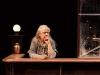
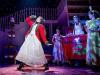
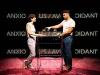
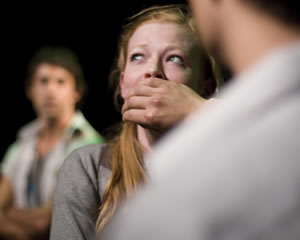
 A collection of high school seniors gather somewhere secluded. They have a terrible secret and they must urgently decide what to do about it. With a dash of Lord of the Flies and healthy serving of River’s Edge, DNA deals with an extended group of young people – not necessarily all friends – as they come to terms with the fact that they have just inadvertently killed one of their own.
Rather than being overly focused on an intricate plot, the play deals with the characters’ inner turmoil and some of the more complex issues that the event creates. Not least of which is how they all deal with their surprising success at covering up their own culpability when one of them, once pressed, devises a seemingly foolproof plan. But no scheme is watertight, especially when one of those implementing it decides to improvise…
The fairly new British play translates effortlessly into this Australian production, its idiom seemingly requiring no alteration and its general lack of local references making the setting fit Anytown Australia just as easily as a disaffected English hamlet. With an orderly structure of introspective two-handers alternating with larger group scenes that move the plot along, it is a work very much aware of its medium, choosing to have virtually all action take place offstage, dealing instead with the decisions of what course to take, or digesting the ramifications of where these decisions have led them. On a similar level the slick, somewhat arch dialogue has a particular quality that seems to strive for authenticity by way of exaggeration, a stylised naturalism if you will.
The eleven strong cast is unusually large for a recent play, and certainly the largest that one can imagine seeing on the Old Fitz’s tiny stage. Furthermore, the play’s use of its performers is somewhat unusual, for rather than being an outright ensemble piece it has roughly five roles that are by far the most prominent in terms of stage time and dramatic focus, while some other characters appear only in the group scenes and several gradually drop out of sight entirely. Without employing doubling or, conversely, any contrivances of the script to get maximum use of this large group, the play’s characters dwindle in numbers to reinforce its themes of alienation and breakdown. Of these comparatively smaller roles, standouts include James Elliot, Stephen Anderson and particularly Olivia Simone as the sultry, attention-seeking and possibly deranged Cathy.
Sarah Snook does a great job with the chattering, nervous Leah, who blathers incessantly with a perennially teenage range of insecurities and overreaching ideas. Snook invests the part with a warmth and appealing vulnerability that mitigates against the role’s considerable potential to become grating. This is all the more important since she, of all the characters who last through to the end, appears to have the most healthily-developed conscience.
Paul-William Mawhinney is especially good as Phil, whose shy, tentative silences and detailed, meticulous speeches are a study in contrasts made highly convincing in his mannered yet nuanced portrayal. It is an intriguing character who at times seems innocent and yet his plans are astonishingly Machiavellian. The very fact that he is capable of composing (apparently on the spot) an elaborate plan to cover up the accidental death indicates either an unnervingly agile intelligence and familiarity with criminal techniques, or suggests he has contemplated such a scenario before and at some length – a disturbing prospect either way. Were it not for his seemingly gentle, unassuming nature, one might suspect a nascent Lex Luthor or Hannibal Lecter is in the making, and Mawhinney plays this ambiguity with assurance.
Although not a brilliant play by any means, DNA is a moody, intelligent piece that will draw you in not only with its twists and turns but also its interesting character dynamics and disquieting premise. It asks questions about self-interest, community and responsibility yet provides no easy answers for them. With a talented cast and confident, economical direction from Kellie Mackereth, it is a solid night of intriguing, unsettling theatre.
Spiky Red Things present
DNA
by Dennis Kelly
Director Kellie Mackereth
Venue: TRS Old Fitzroy Theatre
Season: 8 April - 2 May
Times: Tuesday-Saturday 8pm, Sunday 5pm
Bookings: www.rocksurfers.org or phone 02 9380 5553 for enquiries